Nepalese & Himalayan Craftsmanship
Each sculpture, scroll painting, and carved timber panel moves through several hand-worked stages in family and regional workshops across the Kathmandu Valley and the Himalayas.
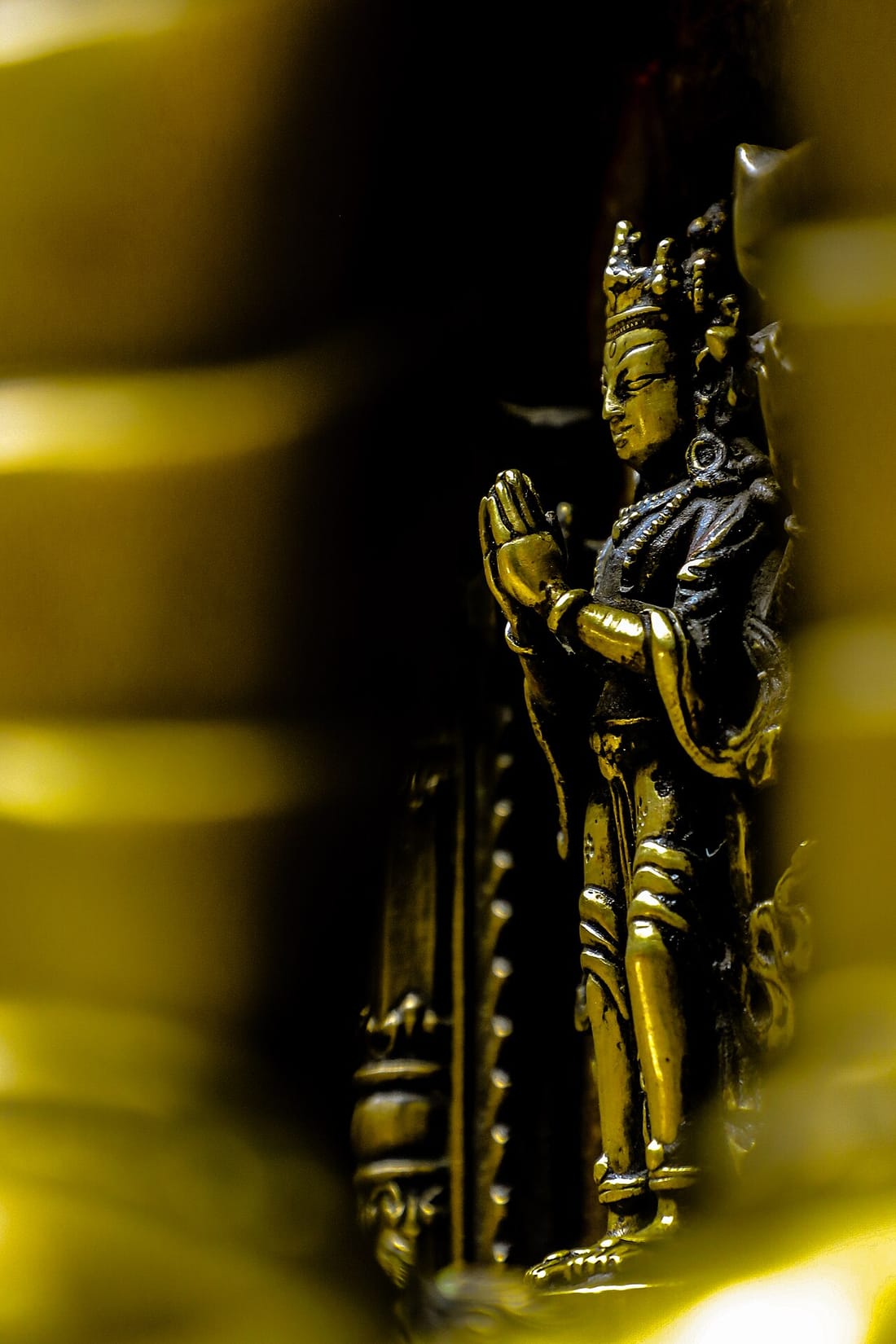
Lost-Wax Bronze Casting
Metalworkers in Patan (Lalitpur) begin by shaping a statue in beeswax and packing it in layers of local clay. After the mold is fired and molten copper-bronze is poured in, the clay shell is broken away. The raw cast then spends days or weeks on the bench, where finishers use fine steel chisels to cut facial features, robe hems, and lotus petals by hand.
Paubha & Thangka Mineral Painting
Scroll painters stretch cotton cloth tight on a wooden frame, prime it with chalk and natural glue, and rub the surface smooth with a river stone. They map out classical proportions with a fine grid before applying ground stone and earth pigments (lapis, malachite, ochre, cinnabar, and gold). A detailed painting often takes weeks or months to finish.
Hand-Forged Acoustic Metalwork
Traditional Himalayan singing bowls are shaped by repeatedly heating a bronze disc and hammering it by hand. Because no two bowls have identical wall thickness, each carries visible hammer marks and its own pitch and sustain.
Newari Woodcarving
In Bhaktapur, Patan, and Kathmandu, Newari woodcarvers work seasoned timber with hand gouges to cut deep floral scrollwork, mythic figures, and window lattices. A light natural oil-wax finish protects the wood while leaving the grain visible.
Provenance & Attribution
We keep our records plain and verifiable. Fine Art Digital LLC does not publish fictional artisan biographies or invented certificate numbers. As confirmed production inventory is added, we list verified workshop origins, materials, and maker credits directly on each artwork page.